
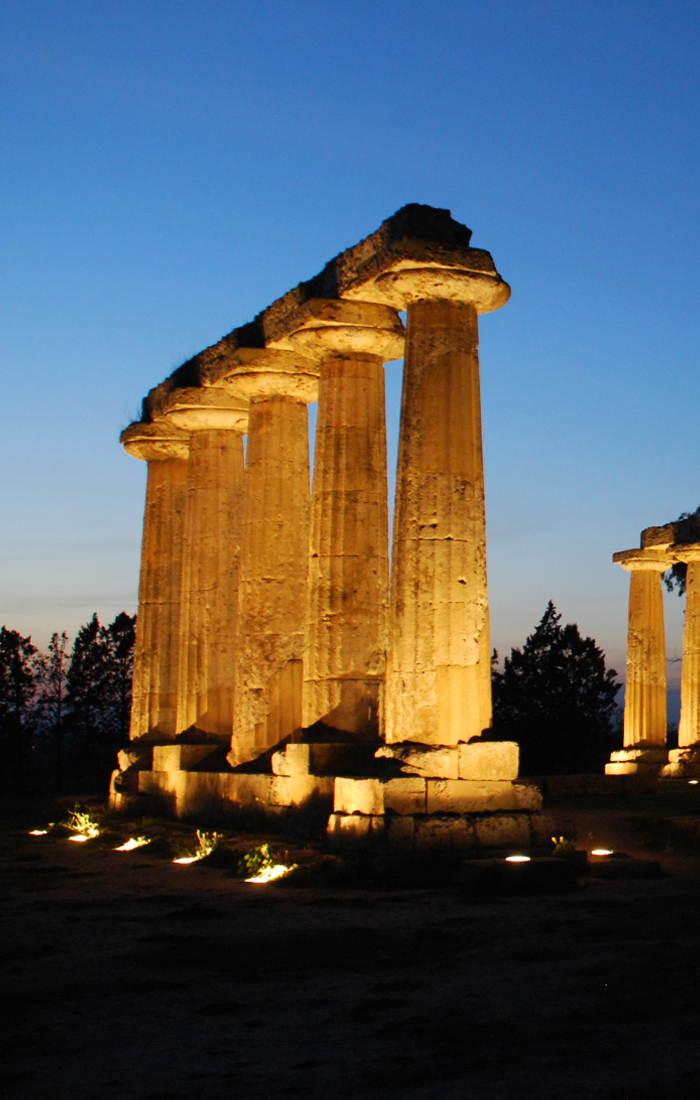
Two “treasure chests” that preserve signs and symbols of a past that have made Metaponto the “capital” of Magna Graecia.
Through a selection of recently acquired finds, the museum offers a complete picture of the Metaponto area, from the first prehistoric manifestations to the late antique period. At the entrance there are the exhibitions “Metaponto roofs and recent restorations” and “Hera and the female world in antiquity”, while on the occasion of Expo 2015 the exhibition dedicated to “Metaponto. The design of the city” (18 July-30 October 2015).
It is also possible to visit the Archaeological Park and the Archaeological Areas of the Palatine Tables – symbol of Metaponto, fifteen Doric columns representing the remains of the temple dedicated to Hera -, and the necropolis of Crucinia.
The antiquarium, the theater, the Roman castrum, the city agora and the necropolis, together with the temples of Apollo Lycius, Demeter and Aphrodite, enrich a path full of charm and history
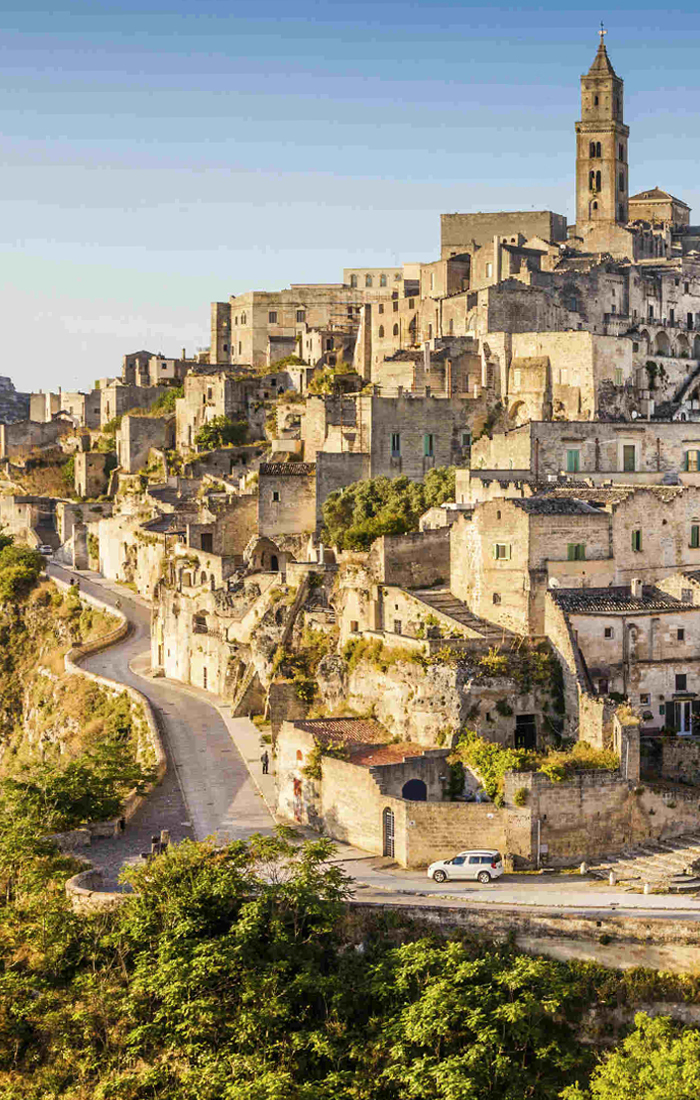
Recognized by UNESCO as a World Heritage Site, the Sassi of Matera are not identified with a monument, but with a system of life and a model of development that has lasted millennia. The Sassi represent a unique urban settlement in the world in the harsh Murgia territory.
Matera is in fact located on a limestone plateau that presents a spectacular anomaly: a central furrow, a real canyon of 70-80 meters, crossed by the Gravina stream. The territory of Matera has been inhabited continuously since the Paleolithic. As far as the Rioni dei Sassi are concerned, these were born towards the end of the fifteenth century. The succession of populations over time has left an intricate urban system, in which buildings overlap natural cavities.
Between the nineteenth and twentieth centuries, the Rioni dei Sassi became home to the poorest classes of the city. Subsequently, a real “transfer plan” was implemented in a new district and a redevelopment and rehabilitation plan of the area was undertaken. Therefore, today it is possible to see the original nucleus of the Sassi and the houses carved directly into the rock and tuff, experiencing a unique sensation: that of being in a nativity scene.
The amazing scenery of Matera has been the backdrop for many famous and less famous films, both Italian and foreign, including Mel Gibson’s blockbuster “The Passion”. Matera 2019 candidate city for European Capital of Culture
Matera Narrated City Project by APT Basilicata and CNR _ITABC Matera Narrated City is a digital platform capable of supporting users both in the planning phase of the visit experience to Matera (UNESCO World Heritage Site since 1993) and while the visit is in progress, allowing them to orient themselves and access cultural content in the vicinity of monuments, sites and itineraries.
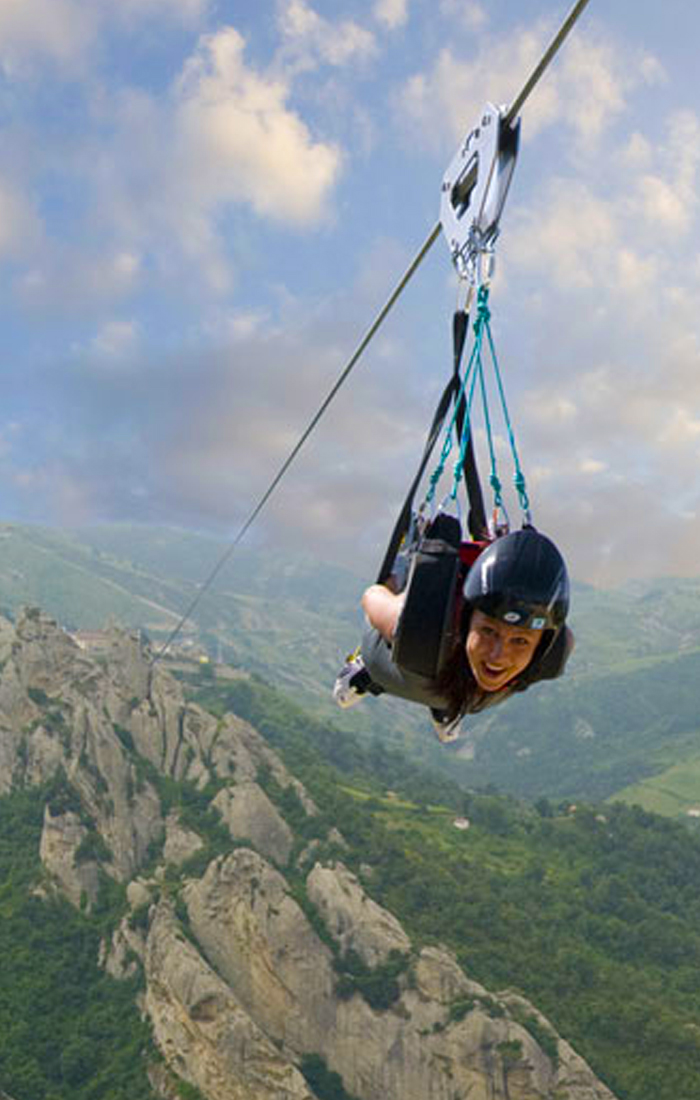
Unique in Italy, the Flight of the Angel will make the dream of flying possible. And for those who love to share everything, even breathtaking emotions, since last year it is now possible to fly as a couple! Harnessed on your stomach to a steel cable that connects the peaks of the villages of Castelmezzano and Pietrapertosa, already known as the “Most beautiful villages in Italy” of the Lucanian Dolomites, it will be possible to experience the thrill of speed in flight along a route of about 1500 meters, flying over a breathtaking landscape at a height of 400 meters. Each journey takes about a minute and a half and the speed can reach up to 120 km per hour. Adrenaline and excitement in absolute safety!
For information:
Tel. +39 331 9340456
Tel. +39 334 7880084
Only on the days when the facility is open it is possible to contact the ticket offices:
Castelmezzano ticket office: +39 0971 986042
Pietrapertosa ticket office: +39 0971 983110
Online booking is recommended
info@volodellangelo.com
www.volodellangelo.com
CRACO
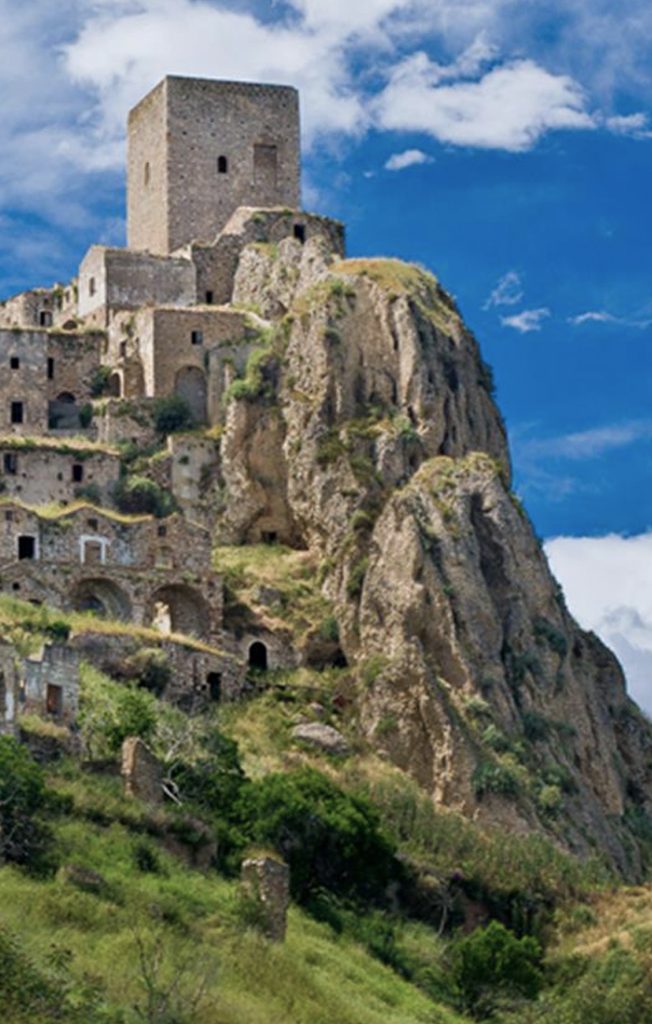
Craco is a town in the province of Matera which is 54 km from the capital.
The first traces of human presence in the area of Craco are some tombs dating back to the eighth century BC found in the locality of S. Angelo.
Like other nearby towns, it is likely that it offered shelter to the Greek settlers of Metaponto, when they moved to the hilly territory, perhaps to escape the malaria that raged in the plain. Craco was later a Byzantine settlement.
In the 10th century, Italo-Byzantine monks began to develop agriculture, becoming a point of reference for local rural communities.
The first evidence of the name of the town dates back to 1060, when the territory was subjected to the authority of Archbishop Arnaldo di Tricarico and cited with the name Graculum, or “small ploughed field”.
In Norman times the fief of Craco was assigned to Erberto (1154-1168) and later to Roberto di Pietrapertosa (1176-1179); in the Swabian era the town, thanks to its strategic position, became an important military center and was entrusted to Godfrey (1239).
In 1276 Craco became the seat of a Universitas, or a Municipality.
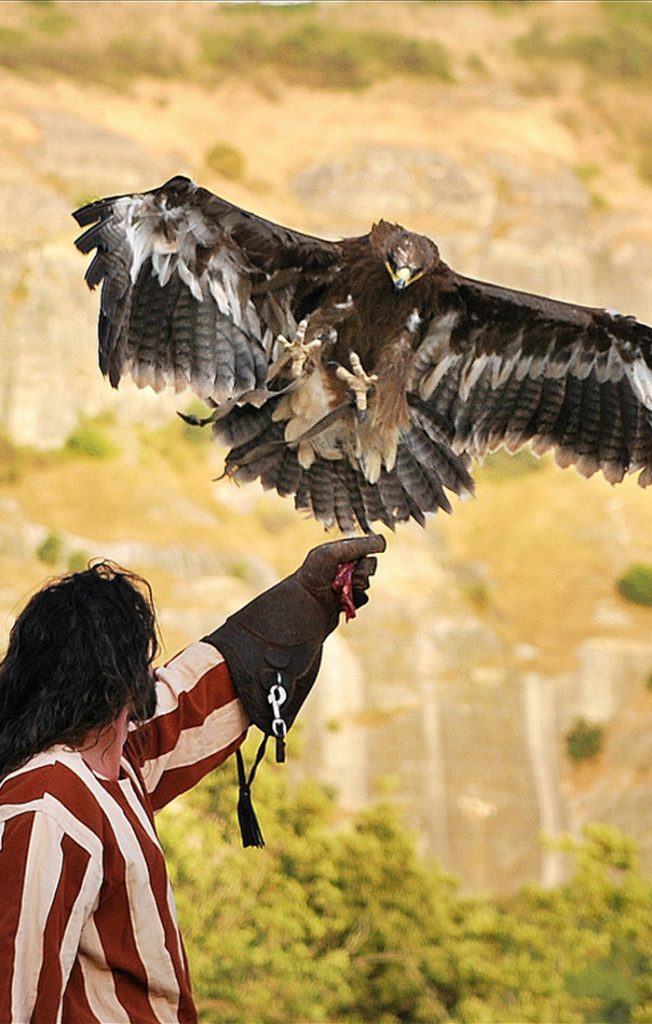
Enclosed in a magnificent forest, between nature, culture and lots of fun, the Parco della Grancia opens its doors. 400 participants, all volunteers, in an amphitheater of 3500 seats, on a natural scenic area of 25000 square meters, are the protagonists of the largest popular theater show in Italy, a great historical fresco that re-proposes in an epic key the period of the Uprisings and post-unification Brigandage in Southern Italy. Over 600 light projectors, 45000 watts of power for a multi-diffusion audio system, dynamic projections of large images, water screens, and evocative scenographic settings give life every year to a unique “live film”, La Storia Bandita, starring the Lucanian brigands led by the charismatic Carmine Crocco, fighting against the Piedmontese soldiers of the Savoy Kingdom. An extraordinary artistic performance embellished with incredible special effects and the well-known voices of Michele Placido, Lina Sastri, Paolo Ferrari and Orso Maria Guerrini. And the emotions continue to multiply in the animations and shows that complete the offer of the Park which from this year also opens its doors to major concert events.
Programming 2015 Park and Film Show
August 2015: 14 – 15 – 16 – 21- 22 – 23 – 28 – 29
September 2015: 5 – 12 – 19 – 26
Info
Municipality of Brindisi di Montagna (PZ)
tel. +39 329 1484744
toll-free number 800 598252
prenotazioni.parcograncia@gmail.com
info.parcograncia@gmail.comdirezione.parcograncia@gmail.com
www.parcograncia.it
With its 192,000 hectares, divided between Basilicata and Calabria, the Pollino National Park is the largest in Italy.
Considered one of the most beautiful and characteristic massifs of the Lucanian Apennines, its name derives from the summit of the Pollino massif, the “Mons Apollineum”, which the Achaeans called “Mount of Apollo”, identifying it a bit in Olympus, for its grandeur that almost touches the sky.
Along captivating itineraries and paths, you enter dense beech and turkey oak woods, such as “Bosco Magnano” located near San Severino Lucano, but also fir and chestnut trees and grassy plateaus, until you “meet” sinuous, proud and centuries-old, the Loricati Pines, symbol of the park, visible above all on the top of Serra di Crispo, called the “Garden of the Gods” precisely because it is considered one of the sanctuaries of this rare tree species with a twisted trunk.
Among these expanses roam specimens of Apennine wolves, wild boars and roe deer, squirrels, porcupines and otters, but also woodpeckers and eagle owls. Among the highest peaks of the entire southern Apennines, flown over by golden eagles, peregrine falcons and kestrels, Serra Dolcedorme, the “roof” of the park, should certainly be mentioned.
Waterways, such as the Frido and Peschiera streams that affect the territory of San Severino Lucano, and rocky outcrops, deep faults and disturbing chasms cross the Pollino Park, also “populated” by fossils dating back tens of thousands of years, such as the skeleton of an “Elepfhans antiquus italicus”, four meters high and lived about seven hundred thousand years ago, found in the Mercure Valleys and currently kept in the Naturalistic and Paleontological Museum of Rotonda, headquarters of the Park.
Nature, sport and culture are combined in this extraordinary green area of Basilicata, a treasure trove not only of environmental beauty but also of museums in which ancient memories, history and traditions of peasant civilization and Arbëreshë communities hover.
www.parcopollino.gov.it
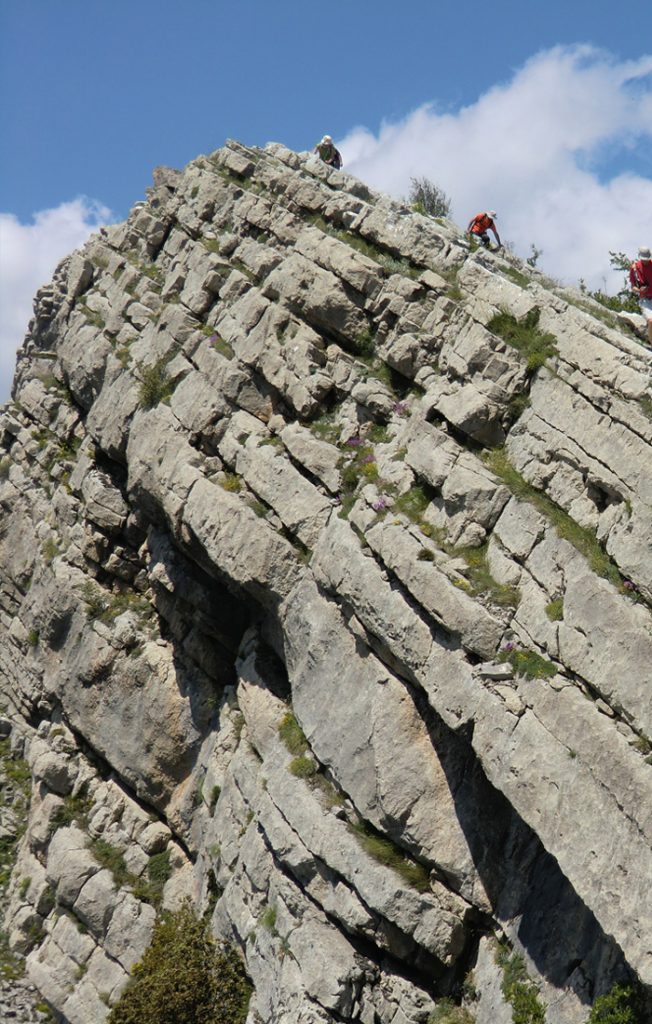
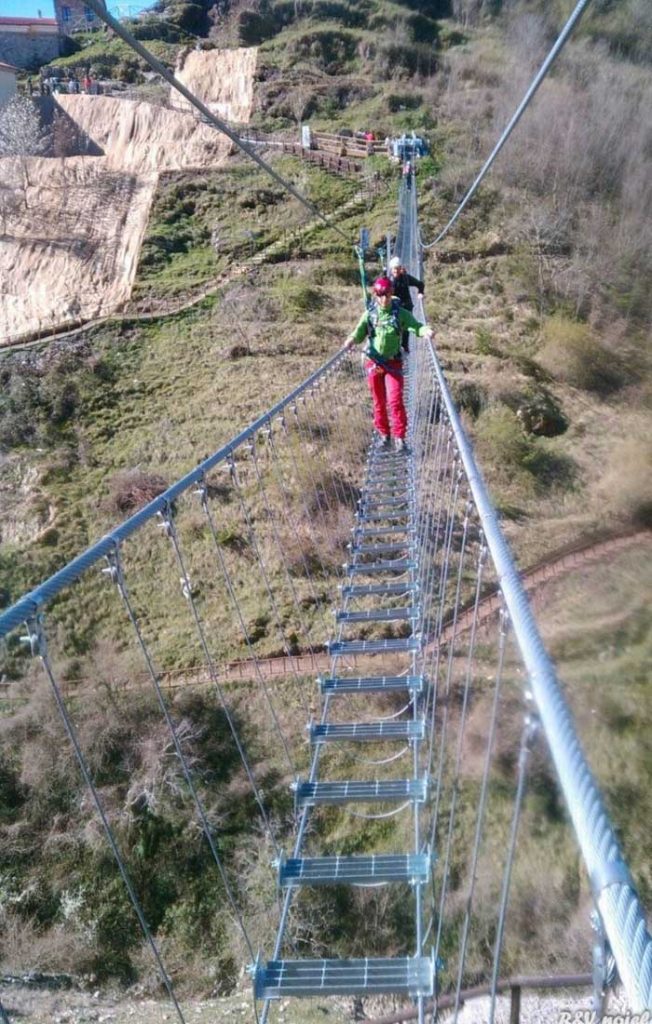
The path of the Tibetan bridges of Sasso di Castalda develops on the banks of the “Fosso Arenazzo” which opens right at the foot of the charming historic center.
Through the narrow streets that branch off between the characteristic stone houses of the historic center, you reach the start of the first bridge, 95 meters long and suspended at a height of about 70 meters, through which you reach the opposite bank on a slope characterized by characteristic geological formations.
Walking along the path along the bank of the “Fosso” you pass the votive chapel and reach the start of the impressive “Ponte alla Luna” in 15 minutes.
With a single span of 300 meters and suspended in the void 120 meters high from the stream below, you literally reach through the air, the ruins of the castle that dominates the village from above.
Upon arrival, a glass sky-walk suspended over the deck awaits us and a viewpoint equipped to catch our breath for a few minutes, admiring the panorama of the surrounding mountains sitting on the ancient ruins.
Walking a short downhill stretch on the stone stairways, you return to the historic center passing through the characteristic church of San Nicola recently restored.
The total duration of the Tibetan bridges route is about 2-3 hours.